
Tank maintenance
How often should you clean your water tank?
There is no single cleaning interval that suits every tank. Here are the factors that matter and how to judge the right schedule for your property.
3 min read
Service
We confirm the tank type, capacity, access route and the condition of the lid and fittings, and agree the plan with you.
The inlet is closed and the tank is drained. We agree beforehand where drained water will go and how long supply will be off.
Settled silt, sand and debris are lifted out of the tank rather than flushed down the outlet into your plumbing.
Walls, floor, corners and the underside of the lid are scrubbed to remove deposits and biofilm.
The tank is rinsed, rinse water is removed, the supply is reconnected and the tank is refilled.
We tell you what we observed, such as damaged lids, cracks or gaps, so you can decide whether any repairs are needed.
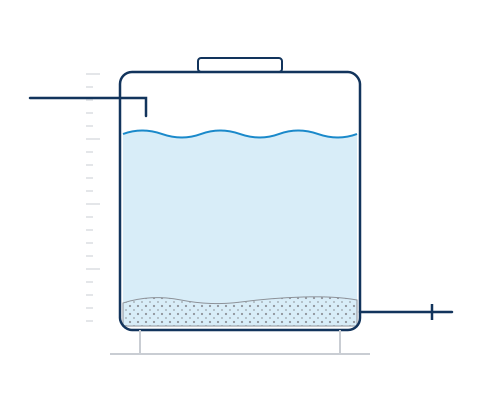
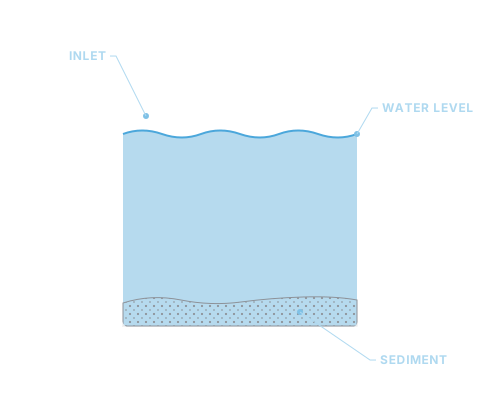
Most tanks slowly collect fine particles carried in by the supply. Over time these settle into a layer on the floor of the tank. Sediment can be disturbed when the tank fills, which may cause cloudy water at the tap and can make it harder to keep the tank clean.
Deep cleaning removes that layer completely and gives you a clean baseline. Regular inspection afterwards helps you judge how quickly sediment returns in your property.
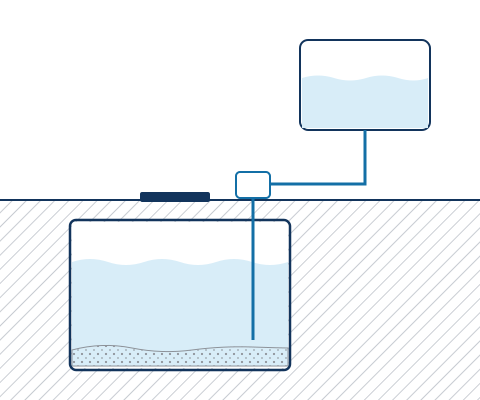
If your overhead tank is filled from an underground sump, sediment left in the sump can be pumped straight back up after the tank is cleaned.
Where there is a sump, we recommend cleaning both on the same visit. Mention it when you book and we will plan the work together.
Read our preparation guide for more detail.
There is no single interval that suits every tank. It depends on the quality of the incoming supply, how much sediment builds up, whether the tank is well covered, and how many people use the water. Regular visual inspection is the best guide; many owners plan a clean at least once a year and adjust from there. We can suggest a sensible interval after seeing your tank.
It depends on the tank's size, condition and access, and on the service. We confirm the expected interruption before work begins so you can store water for essential use.
We clean domestic and building water storage tanks and sumps. Tell us the tank type (for example plastic, concrete or steel), its approximate capacity and how it is accessed when you book, so we can plan the work.
Make sure the tank or sump can be reached safely, know where the main valve and any pump switch are, and store some water for drinking and essential use. Our preparation guide covers this in more detail.
Tank maintenance
There is no single cleaning interval that suits every tank. Here are the factors that matter and how to judge the right schedule for your property.
3 min read
Cleaning explained
What the layer at the bottom of your tank is made of, how it builds up, why it matters, and what you can do to slow it down.
2 min read
Cleaning explained
A short checklist to help the day of your tank or sump cleaning go smoothly, from storing water to clearing access to the tank.
2 min read
Tell us about your property and tanks. We will review your request and contact you to confirm the details, the quotation and a date.